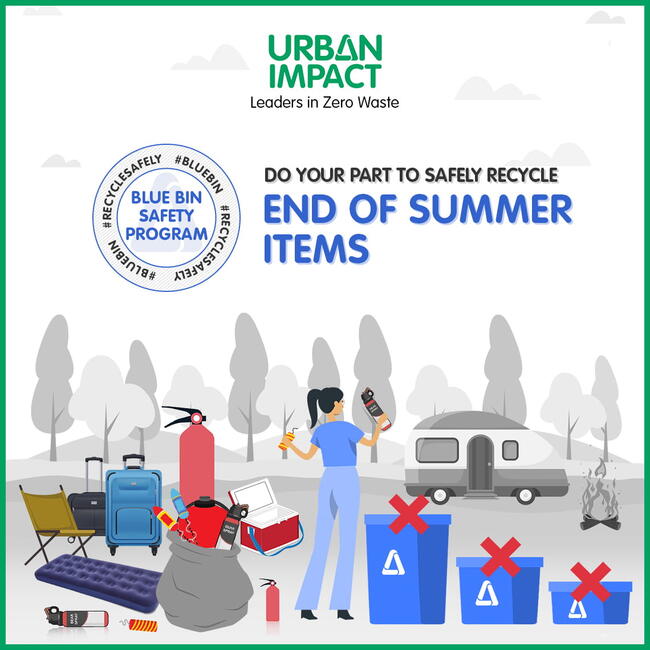
What Do with Summer Gear and Fire‑Risk Items Before Fall Arrives
As summer winds down and we start packing away camping gear, travel essentials, and backyard favourites, it’s easy to toss things into the blue bin without thinking twice. But here’s the truth: a lot of common summer items can pose a serious fire risk or cause major problems in recycling facilities — even when they look recyclable.
At Urban Impact, we always see an end‑of‑season spike in hazardous items and non‑recyclable gear showing up in blue bins. These items can contaminate clean recyclables, damage equipment, and in some cases, spark fires or explosions. So, before you officially say goodbye to summer, here’s a friendly refresher on what not to recycle and where these items should go instead.
Fire‑Risk Items to Keep Out of Your Blue Bin
Propane tanks & butane canisters
Whether full or empty, these pressurized containers are extremely dangerous when crushed. They’ve caused fires and explosions in trucks and recycling plants.
What to do: Check if your retailer offers a take‑back program or drop them off at your local hazardous waste depot.
Aerosol cans (bug spray, hairspray, cooking oil spray)
Even “empty” cans can still contain flammable chemicals. What to do: If the can no longer hisses when pressed, your municipality may accept it in recycling. Otherwise, take it to a hazardous waste facility.
Fireworks, flares & sparklers
Used or unused, these are never safe for the blue bin. What to do: Contact your local fire department or hazardous waste depot for proper disposal.
BBQ briquettes & fire pit ash
Briquettes can stay hot for days and reignite inside collection vehicles. What to do: Cool completely and dispose of them in your regular garbage in a sealed bag.
Cleaning products, solvents & fuel containers
Even empty containers can release flammable vapours or react with other materials. What to do: Take them to a hazardous waste drop‑off depot or follow your municipality’s chemical disposal guidelines.
Summer Gear That Feels Recyclable — But Isn’t
Luggage & duffel bags
Mixed materials (fabric, metal, plastic) make these impossible to recycle. What to do: Donate or resell if they’re still usable. If not, take them to your local transfer station.
Camping gear (air mattresses, broken coolers, folding chairs)
Large, rigid items can jam recycling machinery. What to do: Repair if possible, donate if usable, or bring them to a waste facility. Some retailers run seasonal take‑back events.
Tires (bike, trailer, ATV)
Rubber tires aren’t recyclable and pose fire risks. What to do: Return them through a tire retailer’s take‑back program (like Tire Stewardship BC) or bring them to a designated depot Learn: bike tire recycling
Garden Hoses
These wrap around machinery and cause shutdowns — one of the worst offenders. What to do: Dispose of them in regular garbage or take them to a transfer station.
Why End‑of‑Season Blue Bin Safety Matters
Proper disposal protects:
- Recycling equipment
- Clean recyclable materials
- Workers’ safety
- The environment
And the best part? It’s completely avoidable with a quick check before tossing something in the blue bin.
If you’re ever unsure, don’t guess — check your local waste authority or reach out to us. We’re always happy to help keep your recycling safe and efficient.
Thanks for helping us wrap up summer safely and responsibly. Here’s to a clean, green start to fall!