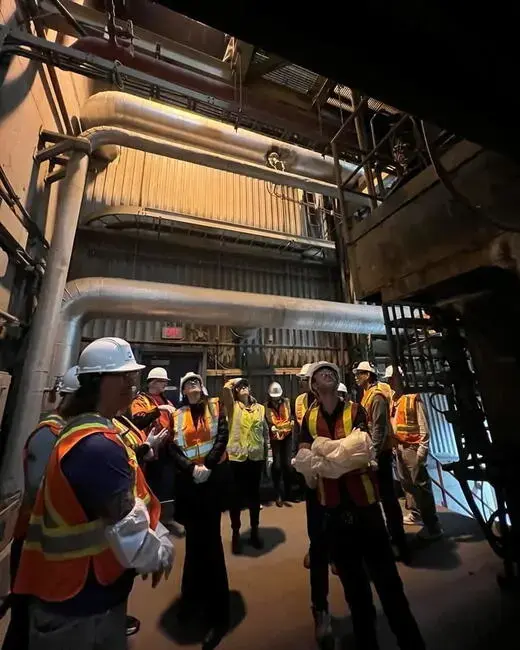
Have you ever wondered where your garbage goes after collection? For most residents, the journey leads to the Vancouver Landfill, a 790‑acre site beside Burns Bog that handles 70% of Metro Vancouver’s waste. On May 1, 2026, Urban Impact hosted a sustainability tour of both the Vancouver Landfill and the Waste-to-Energy Facility—two essential pillars of the region’s waste management system.
Why Waste Management Matters in Metro Vancouver
With population and economic growth on the rise, Metro Vancouver faces increasing pressure on its waste disposal infrastructure. Landfill capacity is limited, making recycling, resource recovery, and waste-to-energy more important than ever.
Inside the Vancouver Landfill
Our tour offered a rare, in‑depth look at how these systems work together to support a more sustainable region. Travelling by bus with expert guides, we explored the landfill’s operations—from environmental protection to renewable energy production.
Key Stops on the Tour
- Zero Waste Centre: A major drop-off point for recyclable materials.
- Stormwater ponds and closed landfill phases: Demonstrating environmental safeguards in action.
- Yard trimmings composting area: Where organic waste is transformed into valuable compost.
The landfill’s landscape is constantly evolving. As new waste arrives, the active face shifts, roads close, and new elevations form—showcasing the dynamic nature of modern landfill operations.
Falcons at Work: Protecting Wildlife and Waste
Bird management is a top priority. The landfill employs a professional Bird Control Team that uses trained hawks and falcons to deter nuisance birds like seagulls and crows. Watching a falcon in action was a standout moment of the tour.
From Waste to Renewable Natural Gas
We also visited the landfill gas facility, where methane from decomposing waste is captured and upgraded into renewable natural gas. This process reduces emissions while creating a clean energy source—an important step toward a more circular waste system.
Touring the Waste-to-Energy Facility
Next, we headed to Burnaby to explore the Metro Vancouver Waste-to-Energy Facility, which has been operating since 1988 and processes 240,000 tonnes of waste annually.
What We Learned
- Mass-burn technology converts waste into steam, powering turbines that generate 180,000 MWh of electricity—enough for about 16,000 homes.
- Metal recovery systems extract roughly 5,000 tonnes of recyclable metal each year.
- Advanced environmental controls continuously monitor emissions.
- A major district energy expansion will soon provide heat and hot water to up to 50,000 homes in Burnaby and Vancouver.
This facility shows how waste-to-energy reduces landfill use while recovering valuable resources.
Building a More Sustainable Future
The tours highlighted the innovation, engineering, and environmental stewardship behind Metro Vancouver’s waste system. These facilities are more than disposal sites—they’re essential components of a sustainable, integrated waste management strategy.
At Urban Impact, we’re proud to support that system. Every route we run and every bin we service reflects our commitment to reducing waste, recovering more materials, and protecting the planet for the long run.